
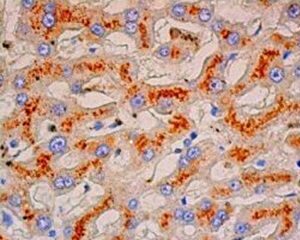
Glucuronidase β [MD432]
Price range: $240.00 through $526.00
Glucuronidases β are members of the glycosidase family of enzymes that catalyze breakdown of complex carbohydrates. Human β-glucuronidase is a type of glucuronidase that catalyzes hydrolysis of β-D-glucuronic acid residues from the non-reducing end of mucopolysaccharides as heparan sulfate. Beta-glucuronidase plays a crucial role in glucuronide hydrolysis, supporting detoxification and excretion of endogenous and exogenous compounds. Glucuronidases β deficiencies cause mucopolysaccharidosis type VII, a lysosomal storage disorder marked by glycosaminoglycan buildup, resulting in severe physiological effects. Beta-glucuronidase forms a homotetramer, with each subunit containing a jelly roll barrel, an immunoglobulin constant domain, and a TIM barrel essential for catalytic function. Glu 451 and Glu 540 residues are critical for enzymatic activity, and mutations at these sites can disrupt structure and function. Beta-glucuronidase regulation influences tumorigenesis and cancer invasiveness, making beta-glucuronidase a potential therapeutic target.
Clone
MD432
Isotype
IgG1k
Host species
Mouse
Species Reactivity
Human
Cellular Localization
Cytoplasm
Positive Control
Liver, kidney, prostate carcinoma
Applications
IHC, ELISA, IF, IP, WB
Intended Use
Research Use Only